

Style Notes
What Actually Makes an Abaya “Luxury”?
14 September 2026 - 9 min read
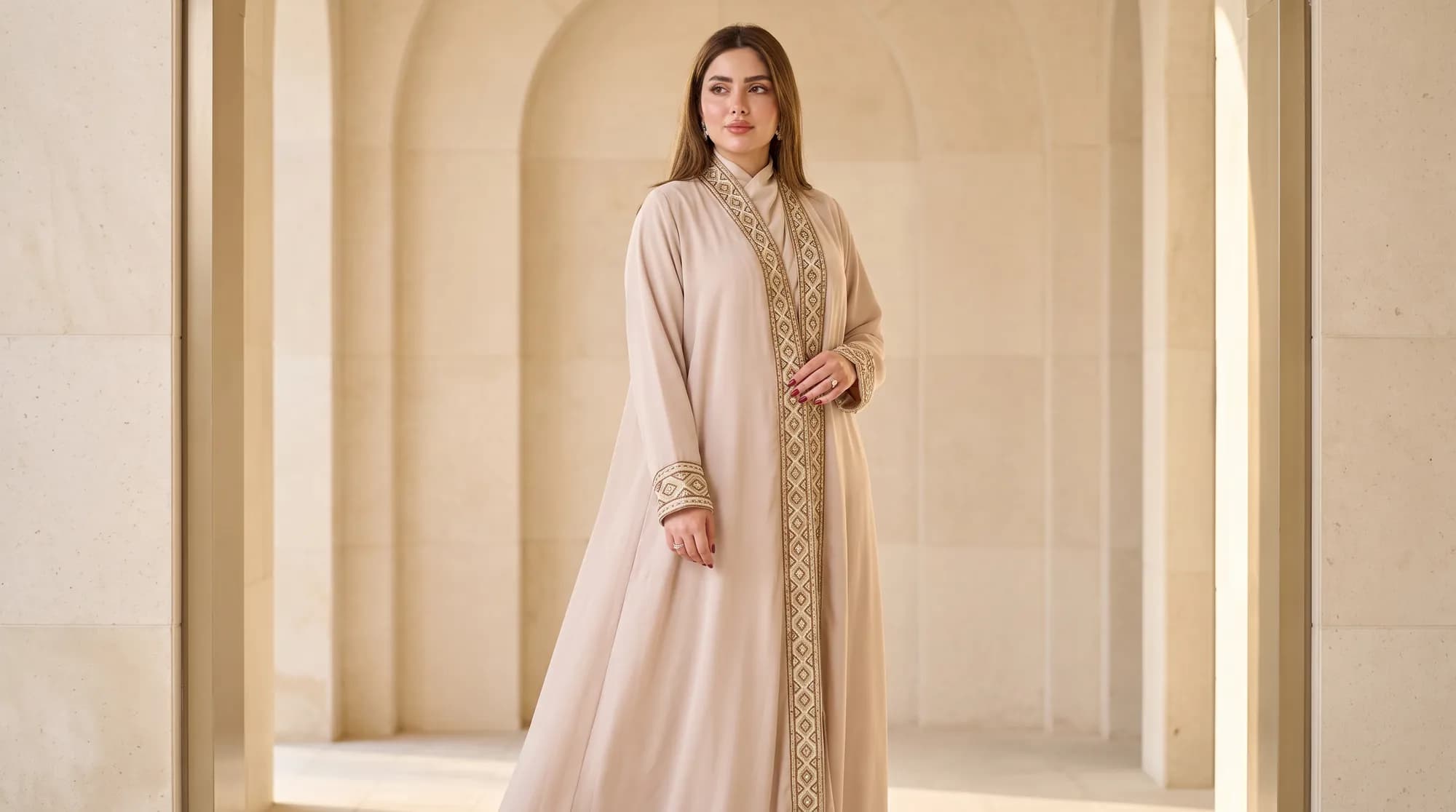
What Actually Makes an Abaya “Luxury”?
Why does one abaya cost AED 300 while another costs AED 2,000? The answer is not always the brand name. A true luxury abaya combines fine fabric, a flattering cut, careful construction, and skilled craft. Yet a high price does not always mean high quality. Some abayas look beautiful in photos but feel very different in person. The fabric may be thin. The seams may pull. Beads may fall off after one wear. This guide will help you avoid those problems. You will learn what makes a luxury abaya worth its price. You will also learn how to check quality before you buy.
The Four Things That Separate Luxury from Ordinary
Four main things make an abaya luxury: 1. Premium fabric with a smooth drape 2. Clean construction and careful finishing 3. A design created with purpose 4. Skilled embroidery or embellishment Each part affects how the abaya looks, feels, and lasts.
1. Fabric Quality and Drape
Fabric is the first thing you notice when you touch an abaya. It also controls how the abaya moves. A high-quality fabric should fall in a smooth line. It should not cling in the wrong places. It should not look stiff unless the design calls for structure. This smooth movement is called drape. Good drape helps an abaya look graceful. The fabric moves with your body instead of fighting against it. It also helps the garment keep its shape. Premium abaya fabric should feel pleasant on the skin. It should not feel rough, weak, or too shiny. Cheap synthetic fabric often has a hard shine. It may also trap heat. A luxury fabric does not need to feel heavy. Many fine fabrics feel light and soft. The key is balance. The fabric should have enough weight to hang well without feeling uncomfortable. You should also think about the climate. Lightweight crepe and breathable linen blends work well in the UAE and Saudi Arabia. Velvet may suit cool evenings or formal indoor events. Before buying online, zoom in on the fabric photos. Look at the way the material falls around the sleeves and hem. Smooth folds often show better drape. You can learn more in our complete guide to abaya fabrics.
2. Construction and Finishing
Turn a good abaya inside out and you will still see careful work. That is one of the easiest ways to spot quality. The seams should look straight and even. Loose threads should not hang from the edges. The fabric should not gather or pull around the stitching. Look closely at these areas: - Shoulder seams - Sleeve openings - Side seams - Neckline - Front opening - Hem - Pockets - Zips, snaps, or buttons These parts face the most stress. Weak work often appears here first. The hem should sit evenly when you wear the abaya. One side should not hang lower than the other. Closures also matter. Snaps should feel secure. Buttons should sit in a straight line. A zip should move smoothly without catching the fabric. A lined abaya needs the same level of care. The lining should support the outer fabric. It should not twist, pull, or show below the hem. The pattern must also match the body well. A luxury abaya should give you room to move while keeping a graceful shape. Raise your arms when you try it on. Take a few steps. Sit down. The abaya should feel comfortable during normal movement. These small details take time. They may not stand out in one product photo. However, they make a big difference after many wears.
3. Design Intention vs. Mass-Produced Patterns
A luxury abaya should feel designed, not simply decorated. Good designers think about the whole garment. They consider the cut, fabric, sleeves, neckline, colour, and details together. Every choice should have a purpose. For example, a wide sleeve can create drama. A shaped shoulder can give a sharper look. A soft A-line cut can create easy movement. A strong design does not need many details. A simple black or blue abaya can still feel luxurious. The shape and finish may do most of the work. Mass-produced designs often follow one basic pattern. A factory may change the colour or add a new trim. The final piece may look fashionable, but it may not feel balanced. You can often see this problem around the embellishment. The beads may look like a last-minute addition. The trim may fight with the fabric. The sleeve shape may not match the rest of the garment. A thoughtful design feels complete. It should also work in real life. Pockets should sit where you can use them. Sleeves should allow movement. The front should stay in place when you walk. This is the main difference between copying a trend and creating a lasting design.
4. Embellishment Craftsmanship
Beads, crystals, pearls, and embroidery can raise the value of an abaya. But only when skilled makers apply them well. Hand-applied details often take many hours. The maker must place each element with care. The spacing should look even. The thread should feel secure. Machine embellishment can also look beautiful. It can create clean and repeated patterns. The important point is the quality of the work, not the method alone. Check how the design meets the fabric. Heavy beadwork needs strong support. Without it, the fabric may pull or sag. The decorated area should stay smooth when the abaya hangs. Run your fingers gently over the details when possible. Beads should not feel loose. Sharp threads should not touch your skin. The design should also look neat from the back. A messy inside finish can feel uncomfortable and may damage other clothing. Think about balance too. More sparkle does not always mean more luxury. A few well-placed details can look richer than a crowded design. A piece such as the Ayla Pearl Crystal abaya can help you study this balance. Look at the placement of each detail. Then check how the embellishment supports the full shape. Read our guide to embroidered and beaded abayas to explore these methods in more detail.
Common Luxury Fabrics Explained
Every fabric creates a different mood. It also affects comfort, movement, and care. Here is what to expect from four common choices.
Velvet
Velvet feels rich and soft. It absorbs light and creates deep colour. This fabric works well for winter evenings, weddings, and formal events. It can also give a black or blue abaya a bold look. Velvet usually feels warmer than crepe or linen. It may not suit a hot outdoor event. It also needs careful storage because pressure can mark its surface. Choose velvet with an even texture. Check that it moves well and does not feel too stiff.
Crepe Crepe is one of the most useful abaya fabrics. It has a soft texture and a gentle drape. It also tends to resist small wrinkles. This makes it a strong choice for daily wear and travel. Not all crepe has the same quality. Fine crepe feels smooth and balanced. Low-quality versions can feel thin, rough, or plastic-like. Hold the fabric up to light if possible. It should offer suitable coverage without needing a heavy layer underneath.
Linen and Linen Blends
Linen feels fresh and natural. It allows air to move through the fabric, which helps in warm weather. Pure linen wrinkles easily. That is part of its natural look. A linen blend may wrinkle less while keeping a light feel. Linen works well for relaxed daytime abayas. Champagne, sand, cream, and soft blue shades suit this fabric beautifully. Look for fabric with a soft finish. Very rough linen may feel uncomfortable against the skin.
Silk-Touch Fabric “Silk-touch” describes a feel rather than one exact material. The fabric often feels smooth and light. It may have a soft glow. This can create a polished evening look without the care needs of pure silk. Check the shine before buying. A soft glow can look refined. A bright plastic shine may make the abaya look cheaper. Silk-touch fabric can also mark or snag easily. Review the care instructions before you choose it.
How to Tell a Genuinely Luxury Abaya from an Overpriced One
Do not judge an abaya by price alone. Use a simple quality check. First, study the fabric. Does it fall smoothly? Does it offer good coverage? Does the colour look rich and even? Next, inspect the construction. Look for straight seams and a level hem. Check the neckline, sleeves, and closures. Then review the design. Does every detail belong there? Does the shape look balanced from the front, side, and back? Finally, inspect the decoration. Beads and embroidery should look secure. Heavy details should not pull the fabric down. When shopping online, look for: - Clear close-up photos - Front, back, and side views - Fabric details - Care instructions - Exact garment measurements - A clear return policy - Information about lining and closures Be careful when a product page uses words such as “premium” or “designer” but gives no useful details. A trustworthy brand should help you understand what you are buying.
What This Looks Like at MAZAL
At MAZAL, we see luxury as more than decoration. A beautiful abaya must also feel good to wear. The fabric, cut, finish, and details must work together. When you view a MAZAL piece, study the full shape first. Then look closer. Notice the fabric’s movement. Check the line of the sleeve. Look at how the details sit on the garment. The Ayla Pearl Crystal design is one example to explore when comparing embellishment and balance. A more minimal style can show quality in a different way. Its fabric and cut must carry the full look. This approach matters in luxury modest fashion in the UAE and Saudi Arabia. Women need clothing that respects modesty while supporting real life. The right abaya should feel elegant at a gathering, comfortable during a long evening, and easy to move in. Our connection to regional style also shapes how we look at modest design. Discover more in our guide to Emirati abaya heritage. See the difference for yourself—explore MAZAL’s luxury abaya edit.
Frequently Asked Questions
What is the difference between a designer abaya and a regular abaya?
A designer abaya usually starts with a more thoughtful pattern. The designer chooses the fabric, cut, and details as one complete idea. A regular abaya may use a standard pattern made in large numbers. It can still look good and serve its purpose. However, it may use simpler fabric and faster finishing. The label alone does not prove quality. Always inspect the material, seams, fit, and details.
Why are some abayas so expensive?
The price may cover premium fabric, skilled labour, custom patterns, lining, hand-finished details, and small production runs. Hand beading and embroidery can take many hours. Fine fabric can also cost much more than basic synthetic material. However, a high price does not always mean a high-quality abaya. Use the four-part check in this guide before you buy.
What fabric is best for a luxury abaya?
The best fabric depends on when and where you will wear it. Crepe offers smooth movement and works well for daily use. Linen feels cool and relaxed. Velvet suits formal events and cooler settings. Silk-touch fabric creates a soft and polished look. Choose a fabric that offers good drape, comfort, coverage, and the right weight for the season.
How do I know if an abaya is good quality before buying online? Zoom in on every product photo. Check the seams, hem, closures, and decorated areas. Look for photos from several angles. Read the fabric and care details. Compare the garment measurements with an abaya that already fits you. You can also ask the brand whether the abaya has lining, how the closures work, and whether the embellishment is sewn or glued. A clear return policy gives you more protection if the fabric or fit does not meet your expectations.
[[https://mazal.ae/luxury-abaya](luxury abayas)](luxury abaya)